Decoding Bronze Alloys: B20 vs B8 vs Brass
Every cymbal begins with metallurgy. The ratio of copper to tin directly shapes acoustic resonance, responsiveness, and frequency range. Most professional cymbals utilize B20 bronze (80% copper and 20% tin with traces of silver), offering a wide dynamic spectrum, musical warmth, and dark undertones that respond sensitively to stick velocity.
Sheet bronze alloys like B8 (92% copper, 8% tin) produce cleaner, brighter, and more focused top-end clarity that cuts effortlessly through dense guitar amplification. Beginner brass cymbals provide affordable entry points for quiet practice, while cast bronze remains the gold standard for recording sessions and touring professionals demanding nuance.
Cast B20 bronze cymbals are poured into individual ingots, heated, and repeatedly hand-hammered and lathed. This traditional craftsmanship creates intricate harmonic textures, lush wash, and rich lower-mid tones preferred by jazz, session, and progressive rock drummers.
Anatomy, Profile, and Sonic Comparison
The shape and thickness of a cymbal determine how sound waves disperse from the point of impact to the edge. High-profile cymbals with steep bow curvature produce higher pitch and faster response, while low-profile flat designs produce deeper, breathy undertones.
| Cymbal Type & Spec | Sonic Character | Ideal Musical Style |
|---|---|---|
| 14" Thin Hi-Hats (B20) | Crispy chick sound, dark semi-open wash, warm foot splash | Studio Recording, Jazz, R&B, Funk |
| 18" Medium-Thin Crash | Fast explosive burst, full body resonance, moderate decay | Rock, Indie, Alternative, Pop |
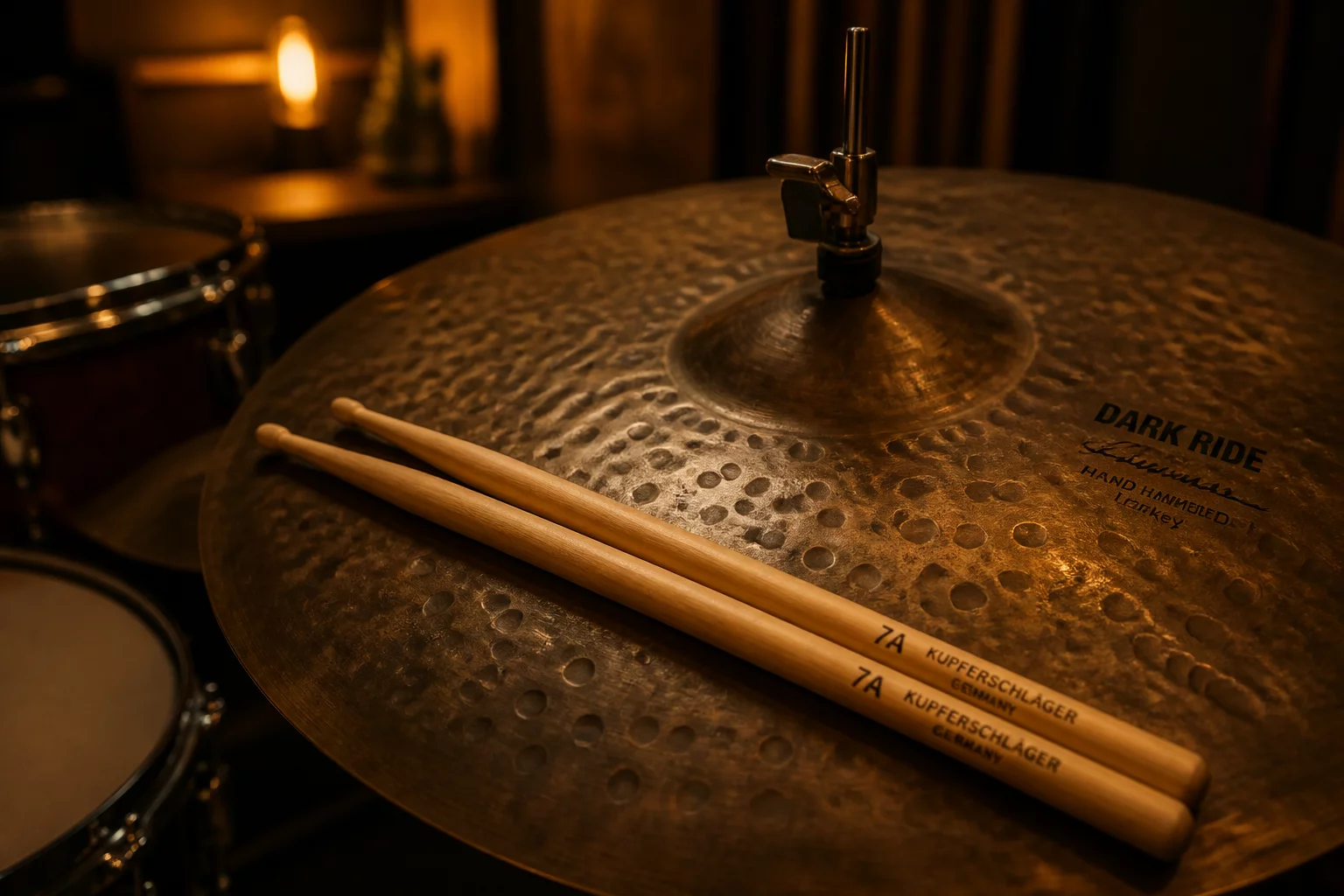
| 22" Heavy Dark Ride | Defined ping articulation, rich smoky bell, controlled wash | Hard Rock, Fusion, Big Band, Heavy Metal |
Pro Drummer Takeaways for Building Your Cymbals Lineup
When auditioning new cymbals at your rehearsal space or in the studio, keep these core principles at the center of your decision:
- Prioritize dynamic compatibility with your band’s volume; thin cymbals break if overplayed in heavy metal, whereas heavy cymbals won't open up in low-volume acoustic sets.
- Match crash diameters with at least 2 inches of separation (e.g., 16" and 18", or 17" and 19") to ensure distinct harmonic contrast during accents.
- Test rides using the exact stick models and tips you use live, because nylon and wooden tips produce radically different ping definitions.

Chad Smith
Senior Drum SpecialistChad Smith is an experienced studio session drummer, gear consultant, and percussion educator who has played on numerous albums and clinic stages across North America.
Frequently Asked Questions
Need Custom Cymbal Advice?
Our percussion gear specialists are ready to help you match rides, crashes, and hi-hats to your drumkit tone.



The breakdown between B20 and B8 alloy responsiveness is spot on. I switched from heavy sheet crashes to thin cast bronze 18" and 20" crashes, and the wash in recording microphones improved dramatically without harsh high-end bleed into the overheads.