
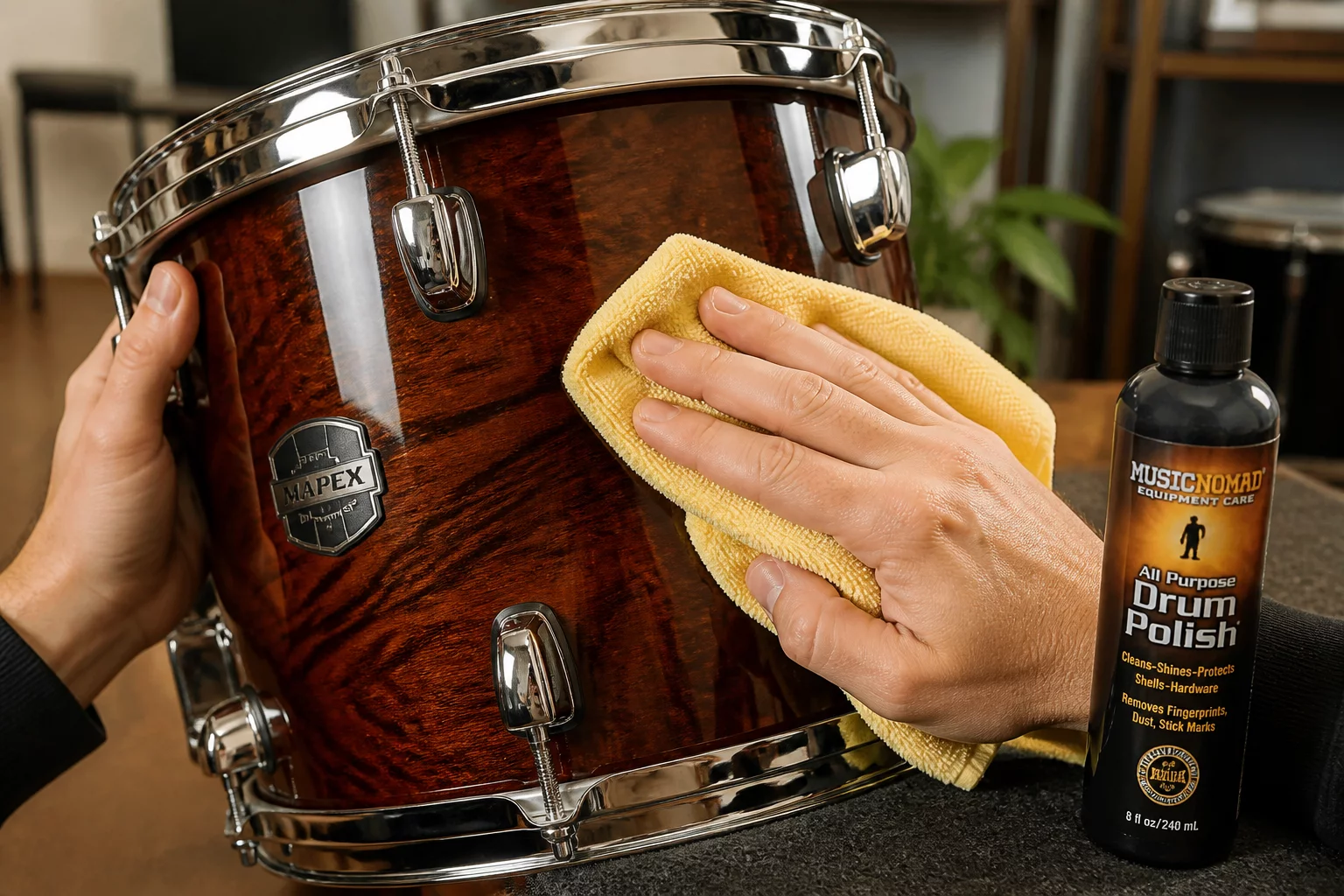
Shell Preservation & Hardware Upkeep
Acoustic shells resonate freely only when free of internal grit, loose swivel nuts, and dried finish oils. During normal play, wood shavings from stick splinters settle inside the vent holes and around the bottom hoop flange. Strip the heads off every drum shell once every six months to inspect the interior maple or birch plies for hairline cracks.
Never use household glass cleaners or ammonia formulas on lacquered drum finishes. Ammonia breaks down protective nitrocellulose and polyurethane topcoats, creating cloudy hazes on high-gloss sparkles and natural wood grains. Use dedicated drum carnauba wax or mild guitar polishes alongside a plush microfiber cloth.
Run a dry fingertip smoothly along the entire circumference of the shell edge to detect gouges or splintering. If you notice minor surface roughness, apply a light coat of pure paraffin wax to the wooden edge. This lubricates the contact area, allowing drumheads to glide easily under tension rods during tuning without binding or ripping the collar.
Maintenance Checklist by Frequency
Organizing your maintenance intervals into clear recurring tasks prevents emergency hardware failures during live soundchecks or recording sessions:
| Interval | Component Focus | Required Service Action |
|---|---|---|
| After Every Gig | Cymbals & Chrome Hoops | Wipe finger oils and sweat with dry microfiber cloth to prevent green tarnish spots. |
| Monthly | Bass Pedal & Stands | Tighten wing nuts, inspect rubber feet for metal punch-through, oil rocker cam springs. |
| Semi-Annually | Tension Rods & Lugs | Clean threads with mineral spirits, re-lube with white lithium grease, check internal lug springs. |
Essential Drum Maintenance Takeaways
Adopting disciplined kit maintenance habits delivers consistent tuning stability and preserves gear resale value for years:
- Always loosen tension rods diagonally in star patterns before completely removing drumheads to prevent hoop bending.
- Replace cymbal stand sleeve felts annually to completely prevent harmful metal-on-metal keyholing on bronze bells.
- Keep padded drum cases unzipped for 2 hours after humid performances to let trapped moisture evaporate safely.

Cindy Blackman
Senior Drum SpecialistCindy is an international touring drummer, drum technician, and studio veteran with over two decades of stage and recording experience, specializing in vintage drum restoration and acoustic resonance optimization.
Frequently Asked Questions
Need Help Setting Up Your Maintenance Kit?
Our drum technicians are available to answer your hardware repair and tuning questions.


Great advice on using white lithium grease rather than WD-40 on lug threads. I stripped two tension rods last winter on my gigging snare before realizing standard solvent was drying out my casings. This article saved my vintage birch kit!